Category: Uncategorized

  • Exhibition in Berlin:’Let’s Rethink Sensuality’

    Exhibition in Berlin:’Let’s Rethink Sensuality’

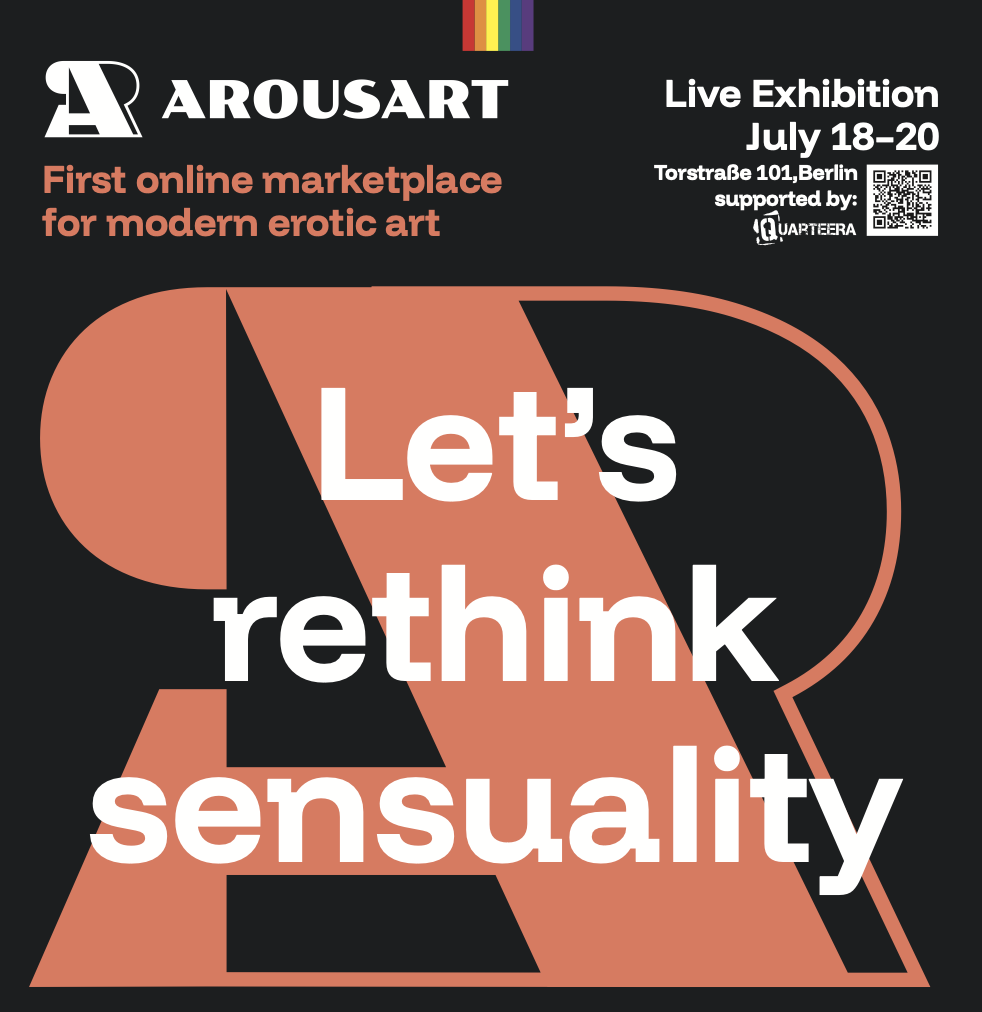
    Promotional poster for ArousArt featuring the tagline 'Let’s rethink sensuality' and details about a live exhibition in Berlin from July 18 to 20, showcasing modern erotic art.

    ArousArt is launching. ArousArt is the new platform devoted exclusively to contemporary erotic art. This digital space rethinks how we experience sensuality through art. To celebrate, we are hosting our first physical event in Berlin, Germany. ‘Let’s Rethink Sensuality’ exhibition will take place from July 18 to 20. To showcase artworks that explore intimacy, vulnerability, play, and embodied tension.

    ArousArt brings together artists from across the globe. You will see works from Europe, the USA, and the UK. What connects these artists is their bold and nuanced approach to sensual expression.

    The exhibition ‘Let’s Rethink Sensuality’ opens during Pride Month, just one week before Berlin’s Pride Parade and one week after the Rave the Planet demonstration. Many of ArousArt’s artists are part of the LGBTQIA+ community. We are proud to amplify their voices and increase visibility through art that dares to feel.

    Opening Night Flow:

    18:00 — Doors open.

    19:00 — Welcome words from ArousArt and our partners.

    19:45 — Performative artist.

    Until 22:00 — DJ, drinks, conversations.

    We’re proudly represent: Marly Indigo (France), Joana Lucas (Germany), Victoria Selbach (USA),  Jim Picco (Italy),  Amanda Joy Calobrisi (USA),  Francesco Brunetti (UK), Tarja Laine (Netherlands),  Cherie Birkner (Germany),  Johannes Pøl (Germany), José Del Palo (Germany),  Philippenzo (Lithuania),  Luc Josserand (France), Tracy von Ahsen (USA),  Igor Shulman (Czech Republic),  Laszlo Nemeth (Greece), Liza Pushkina (Germany),  Dora Banhegyi (Hungary),  Ciril Helbock (Germany), Alexey Kovalchuk (Ukraine),  Militsa Clifford (Georgia),  David Jester (USA), Florencia Martina (Germany),  Bogdan Jensen (Germany),  pskl (Germany).

    Nothing censored. Nothing superficial. Just come.

    Please note: Age restriction is 18+


    Live Exhibition 

    Torstrasse 101, 10119 Berlin
    (The Lovers and Leaders Space)

    Hours

    July 18: 18:00–22:00 (Opening Night)

    July 19 & 20: 10:00–22:00

    What to bring

    Your curiosity and openness
  • Political ambitions and erotic art

    Political ambitions and erotic art

    In medieval Europe, religion wasn’t just a matter of faith — it was a powerful tool of governance and control. Churches were not only spiritual centers, but also symbols of political power, financed and shaped by the ambitions of local nobility and elites.

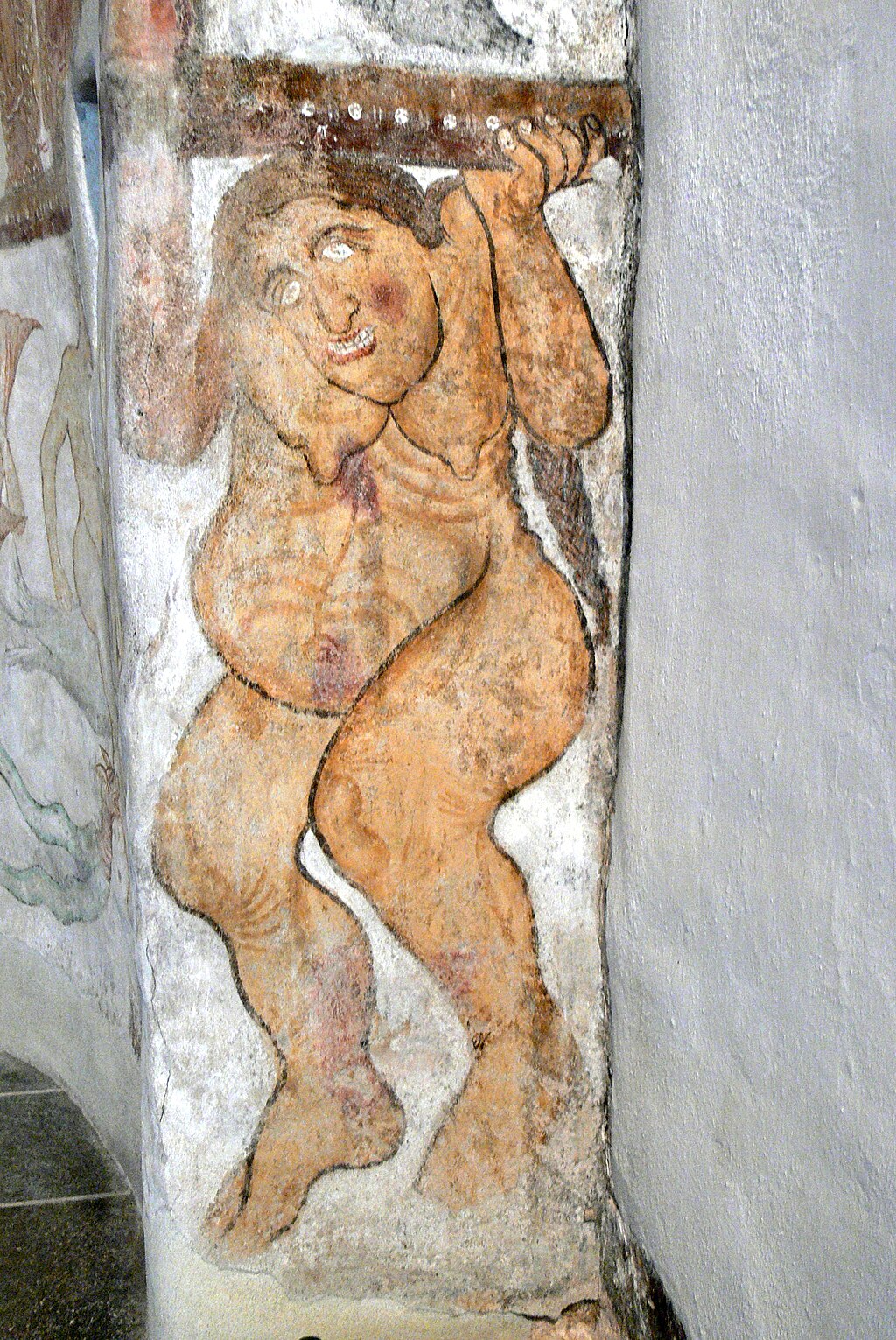
    Fresco depicting a naked figure holding a beam, showcasing exaggerated facial features and body proportions.

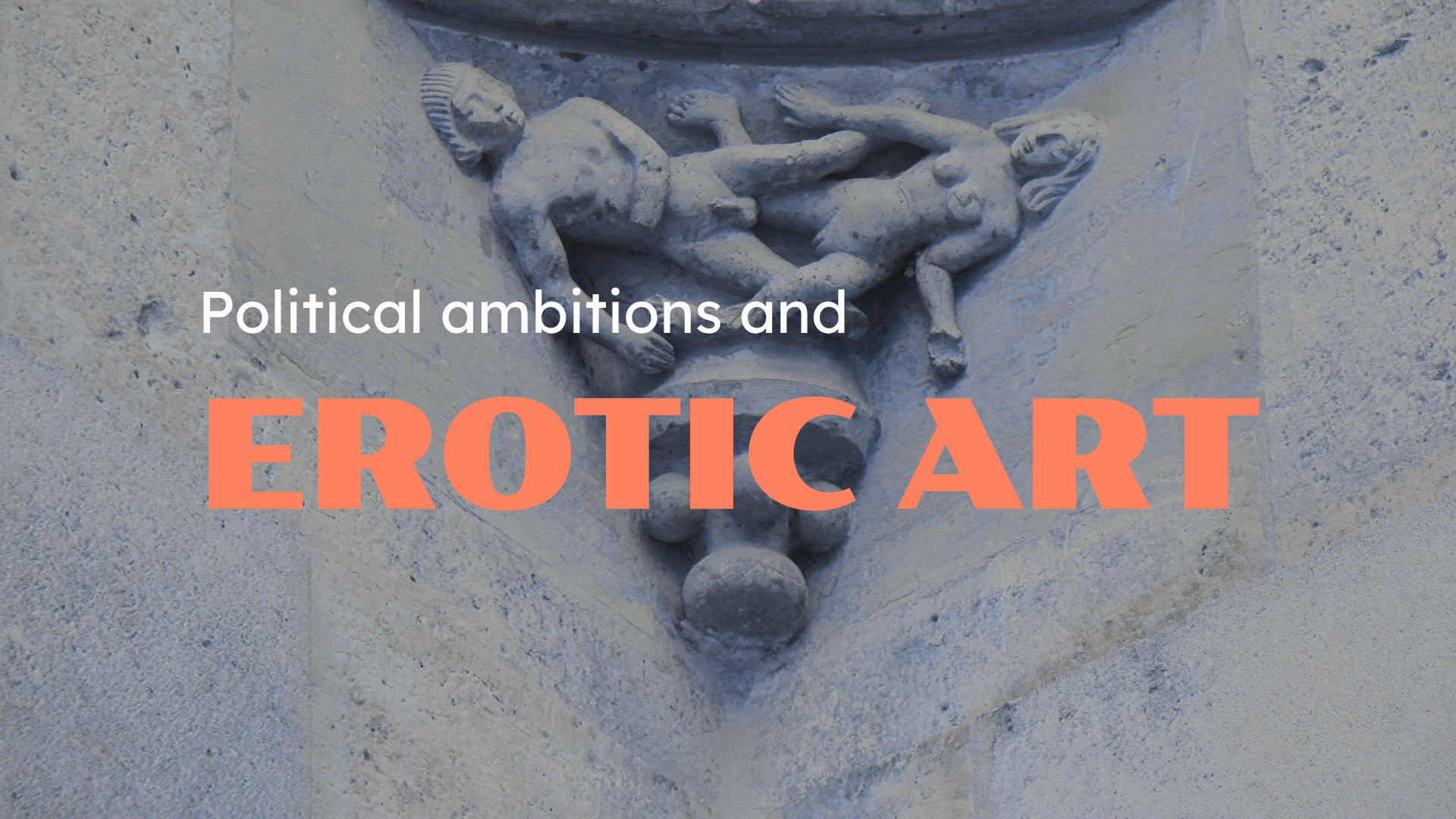
    In the 11th and 12th centuries, particularly in Spain, sculptural representations of penises, vulvas, and scenes of intercourse could be found decorating church facades and column capitals. Such explicit scenes can still ignite debate today.

    But how did such images end up in sacred spaces? Two popular theories are suggested by scholars most often:

    • A warning against sins: These images were not intended to provoke desire but to shame it. Vivid visual reminders of human weakness and the danger of indulgence.
    • An emblem of fertility and life energy, deeply rooted in culture, is a reflection of folk beliefs.

    However, the most interesting theory from our point of view was noted by Dr. Isabel Mellén in her book El sexo en tiempos del románico (Sex in the Romanesque Era). She thinks that these scenes may also have been part of political propaganda.

    Eroticism as a tool of power:

    According to Mellén, these representations may have served to underline the sinfulness and moral rot of enemies for the same nobility who funded the construction of the churches. Sculptures and images turned into allegories that served to reinforce the power of the church and the elite.

    This shows how art is not only an aesthetic but also a mighty tool of influence, bridging the sacred and the political.